ed_rex: (Default)

How do I love thee, teevee show?
Let me enumerate the ways ...

It has been noted before, by me and many others, that we live in the Golden Age of Television. My personal honour roll includes such singular creations as Orphan Black, Atlanta, Rick and Morty, Treme, The Wire, Community and, most recently and especially, The Expanse.

No doubt, your list will vary — perhaps Deadwood is on it, or Strange Empire, or The Sopranos or Mad Men or Game of Thrones or ...

Or, or, or ... Those far-from-exhaustive lists are very much the point. Only a few years after it seemed "reality" shows would be the death of scripted television, there has been an explosion of good — or at least ambitious — stuff.

But for my money, The Expanse is the gilding on our Golden Age. It is a science fiction program that doesn't (hardly) cheat on the science; that presents three societies (Terran, Martian, and Belters) that are, each of them, complex, with multiple factions and vision and interests; that features full-blown people as its principles, each with back-stories, motivations and neuroses that are only sometimes in sync with their friends and lovers.
It is, in short, far more than the sum of its (excellent) parts. Allow me to enumerate a few of them.

  1. The writing | This is a show that moves. Some have complained that things sometime happen a little too fast. I disagree. The Expanse is a program that has a story to tell; this is Game of Thrones, where after a couple of seasons it became pretty clear that the creators had not particular end-game in sight, and so more and more came to rely on soap opera plot devices and soap opera pacing to keep viewers involved. (I confess: I think I gave up on that show the season of "The Red Wedding".)

    The Expanse moves fast, because a lot happens in it. And that's a good thing.


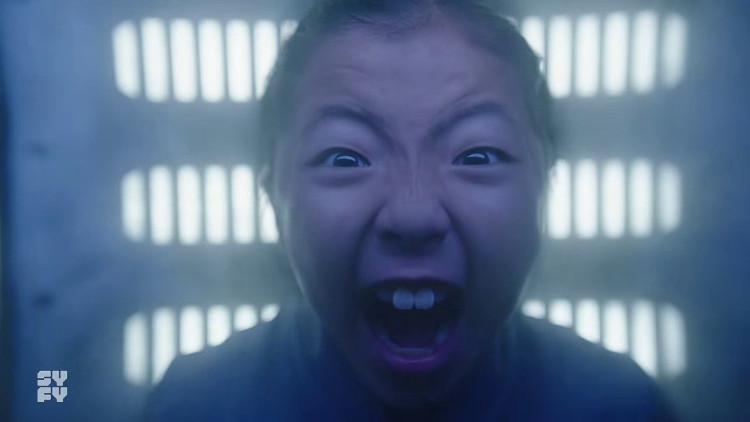
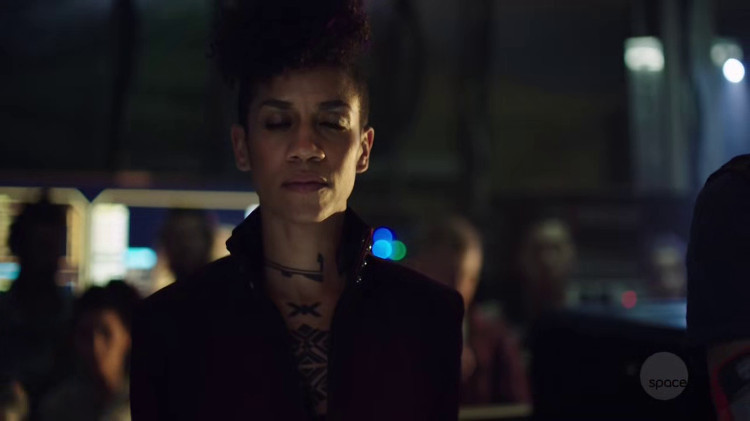
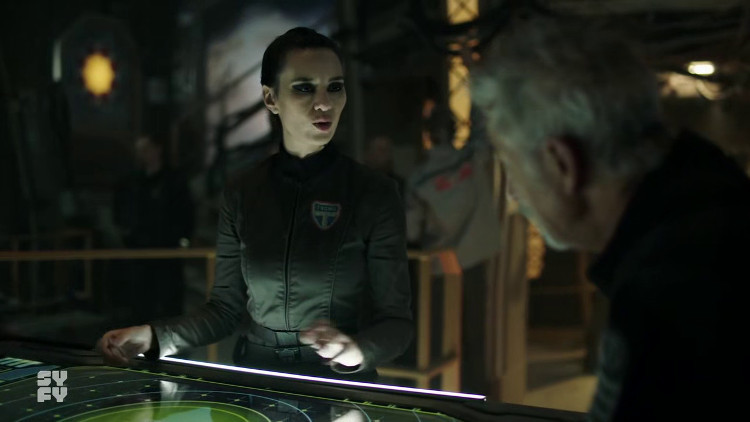
  2. The Women | It is not quite unique for science fiction to offer female protagonists as fully-realized human beings, but it's far from common. And in my experience only Orphan Black can rival The Expanse in that department. But the former was much more constricted in its canvas. Where Orphan Black offered a multitude of clones, The Expanse gives us a middle-aged diplomat cum politician; a brilliant young engineer running from an unhappy past; a young, idealistic Martian marine; an all-too filial daughter bent on revenge for her father's downfall; a married Reverend with a thirst for adventure that threatens her calling and her family; a fierce rebel fighter in a struggle to lead a revolutionary army ...

    And those are just off the top of my head.


  3. The Diversity | Did I mention that the diplomat is of south-east Asian background? That the engineer and the Martian marine are black? That the filial daughter is oriental? That the fierce rebel is an Ojibwe Canadian in real life? Or that many of the other people we come to know over the course of the program's three seasons (so far!) are also, well, not white?

    For that matter, even the white people on this show are seldom the blue-eyed blondes so common on American television. And, while we're on the subject of looks, one might think that the casting directors set about to not include any actor with standard (American) "good" looks. This show's diversity is more than skin deep. It goes to wide, flat noses, to women with flesh, to men with wiry black facial hair. I could go on. And I could, perhaps, withdraw my suggestion that the show-runners were deliberately trying to subvert standard American television looks, in favour of the possibility they simply tried to pick the best actors for the roles.
    br /> Regardless, the cast of The Expanse doesn't look much like most American television, but comes at least somewhat close to what any big, multicultural city street looks like.


  4. The Relationships | First of all, they vary. A lot. But I will take a brief look at the relationship between Naomi (the aforementioned engineer) and James Holden, the ship's (it's a science fiction program; of course there's a ship!) captain and the closest we have to a full-on protagonist.

    James and Naomi start off as distant colleagues, thrown together by bad luck into an intimate working relationship that, slowly, becomes a love affair. But Naomi, as a character, is never "the love interest". She starts out as, and remains, a protagonist in her own right. (Indeed, one of season three's main plots concern the repercussions Naomi faces from Holden and the rest of her crew for a decision she made at the end of the second season. Her "betrayal", and her eventual reconciliation with both lover and friends is a master-class in writing that respects all of the characters as people, not roles.

    Naomi may be Holden's lover, but it is always clear that that relationship does not define her.


  5. The Newtonian Physics | I want to say the show doesn't cheat on the physics, but it's not really true.

    50 years after 2001: A Space Odyssey blazed a silent trail it remains the road less followed; The Expanse joins the Star Wars crowd in ignoring the fact that there is no sound in a fucking vacuum!

    Le sigh.

    So, engines roar, bullets shriek and metal groans when it's punctured or torn. It irks me, but the rest of the show is so good, I'll forgive the trope and pretend the sounds are a form of background music.

    Where it excels in providing at least a verisimilitude of Newtonian physics. In reality, space is (to crib from Douglas Adams) quite big, thank you, and The Expanse provides us with the sense that it takes a lot of time to get from point A to point B. A voyage from one asteroid to another takes time; even a missile fired from one ship to another, takes time.

    I imagine a physicist doing the necessary calculations would find all sorts of signifcant errors and outright cheating, but for a civilian viewer, The Expanse offers, as I said, verisimilitude. No Luke Skywalker hopping from one solar system to another in a fighter unequiped with a warp drive (or whatever they called faster-than-light speed technology in that franchise).

    All that is a welcome change, as it the fact that the show remembers that there is no gravity in space; characters wear magnetic boots, they suffer under acceleration, they sometimes float in zero G. Quite a lot for a television show with what one presumes is a relatively small budget. (The special effects are not first-rate, but they are very good examples of second-tier work; no danger of one's suspension of disbelief being broken by laughable visuals.)


  6. The Politics | I mentioned earlier that there are three main factions depicted on The Expanse. But none of them are monolithic, and all of the various sub-cultures harbor misguided ideas about the other(s). In the world(s) according to The Expanse, individuals matter, they can affect things — even change things — but so too do groups, from small cabals to a mindless mobs. No one is in full control, of anything.


  7. The Humour | The Expanse is a high intensity drama whose characters are forever chasing events at least partially beyond their control. But it is not an action adventure (though when there is action, it is invariably really well done). The characters are given time to breathe; viewers are given time to care about them, about their motivations and their backstories. (That quiet moment when strong-man Amos explains why he knows how to walk in heels is a priceless example.)

    And part of the way we come to care about these people is through their senses of humour. There aren't many jokes on The Expanse, but there are a lot of chuckles, and no few laughs. As in real life, there are quips, there are bon mots, there is humour in contextual repetition. In short, and to repeat myself, the show is rich with deeply-etched characters.


  8. The Action | There aren't a lot of action sequences in The Expanse, but when they happen — where as ship-to-ship or hand-to-hand combat — they are invariably well-directed.


  9. The Villains | Even the show's most reprehensible characters are portrayed as something more complicated than just evil. There are thugs and sadists on the show, but even they are depicted as telling themselves stories that make their villainy necessary. We get the sense that even Dr. Strictland — torturer of children — thinks he is a good guy, doing horrible things for the greater good.
There is a one hell of a lot more to be said in praise of The Expanse. The acting is of an almost BBC level of craft; the broader story evinces what a friend called an "optimistic outlook on humanity without being schmaltzy or unrealistic" — and, I will add, while facing up to some of the worst that humanity has to offer as well.

And, as with the best "real" science fiction, it provides us with that ol' sensa-wonda in proverbial spades.

If you have been watching The Expanse I'd be delighted to know what you think of it; if you haven't been, I hope to hell what I've written is enough to convince you to check it out.

ed_rex: (Default)

I wasn't pleased at first with the flash-back to Beth's past, but by the end, all was forgiven. In one episode Orphan Black has given the sort of backstory that Better Call Saul has been milking for nearly two full seasons now.

As a standalone show, I'll give it a B-, but if subsequent episodes build on it as I rather think they will, the grade will rise.

How long 'till next Thursday ...?

ed_rex: (Default)

Dissing Death in Heaven

Image: Clara walks among gravestones.

Almost there. With only a Christmas "special" still to dread, the 2014 slog that was Doctor Who's 8th revived series has, mercifully, nearly come to a close (if not to a merciful close).

An an honest critic must give Steven Moffat his due. From Danny Pink's classroom tears in his introductory episode, to a payoff for television's Least Convincing Romance Ever, to the Doctor's query, "Am I a good man?", with which the series opened, at least this year, Moffat didn't drop any of the major plot points he raised during the series. (Well. Maybe one. Time will tell.) The answers were neither clever nor convincing, but at least they were provided.

Yes, that's faint praise; and probably too generous. For along with the answers, "Death in Heaven" slaps us with un-foreshadowed plot twists out of sketch-comedy satire, blatant emotional manipulation, a debate on moral philosophy whose sophistication would shame a class of 12 year-olds, and an entirely unwelcome appearance by a Magical Negro.

But tell us what you really think! I hear you cry. Of plots and themes and lies and agonies. Spoilers and cussing as usual. I think most of you know the drill by now.

ed_rex: (Default)

Throwing out the Doctor with the Dark Water

Image: Clara has regrets

"Dark Water," the 11th entry in a 12 episode series, trundles along with a certain amount of professional competence, but is very far from being good drama.

The episode bears almost all the flaws we have come to expect from Steven Moffat's latter oeuvre. A story with the density of rotten sea-ice that groans along at a glacial pace and tedious swaths of explanations that don't, actually, explain much at all.

The upside includes excellent performances by Peter Capaldi and Jenna Coleman and, especially, from Michelle Gomez as the mysterious Missy.

Want more? Throwing out the Doctor with the dark water includes spoilers as per usual, including a couple of Big Reveals; click at your own risk if you haven't seen it yet.

ed_rex: (Default)

In the Forest of the Blight

Image: The Doctor and Clara look out from the Tardis as it floats in space. Screenshot from 'In the Forest of the Night'.

Here we go again: interrupted for a couple of weeks by an influx of competence, Steven Moffat's Doctor Who is once more circling the black hole of creative bankruptcy. Moffat's name isn't on "In the Forest of the Night" — the official blame goes to one Frank Cottrell-Boyce — but his fingerprints are all over it.

Child in peril? Yup. Magic child in peril? Yes and yes.

Lots of expository dialogue? Oh, yes.

Completely implausible reactions to extraordinary events? You know it.

Magic Reverso-Babble TM to ensure story has no lasting consequences? Why not? We're in Moffat-land!

Truth is, there is so much wrong with "In the Forest of the Night" it's hard to know where to start — or where to stop. I made every effort to be parsimonious in my critique, to prune away the dying limbs the better to reach the rotten heart of the tale, but did I succeed?

You can judge for yourself by reading In the Forest of the Blight. Snark, spoilers and baffled vitriol behind the link, as usual.

ed_rex: (Default)

Flatline falls short

Image: The Doctor looks out through a tiny Tardis door. Screenshot from 'Flatline'.

I did it again. Made the mistake of watching a recent episode of Doctor Who a second time.

I really enjoyed "Flatline" the first time around. I barked delighted laughter and might even have gasped in surprise a time or two. I found Rigsy charming and Clara on her own a small revelation.

But when I queued up the story for a second go-through, things were not so good. Not terrible, but too obvious by half and derivative without improving on the inspiration.

My full review, as always, includes spoilers along with my keen analysis (or so I like to believe) and charming nervous exhaustion. This time, there's also a poll! Click here for the full story.

ed_rex: (Default)

Doctor Who takes the A-Minus Train

Image: Clara raises a glass to the last hurrah. Screenshot from 'Mummy on the Orient Express'.

I know, I know. This series' ninth episode aired yesterday and here I am, posting about the 8th. I have no excuses, except that of "Life got in the way."

To those who'd wondered where I'd gone (and missed me) I say, "Mea culpa and that I'll try to do better with 'Flatline'." To those who'd wondered where I'd gone (and hoped I'd stay away), I say only, "You can't get rid of me that easily! But if it's any consolation, my reappearance comes with a surprise: I quite liked 'Mummy on the Orient Express'!"

What a difference a good script makes.

I was all-too-ready to dislike "Mummy On the Orient Express" as much as I did last week's "Kill the Moon".

MOOE's title suggested only another tired homage to, or rip-off of, someone else's creation. But what do you know! MOOE was funny and intriguing (if poorly-directed), with a believable interpersonal drama and Peter Capaldi's best performance yet.

In just 45 minutes, Jamie Mathieson managed what Steven Moffat and his previous collaborators could not in seven episodes: to make Clara's doubts about the Doctor believable.

Was "Mummy on the Orient Express" a perfect episode? Not quite. But it was better than most and a lot better than we have become accustomed to in recent years.

As usual, my full review is spoilery. Not so usual, it is hardly angry at all (which might help to explain why I am so late in its delivery). Also not so usual, this might be the first time I find myself in fundamental disagreement with Patches365. Which kind of makes me wonder if I'm wrong.

Click here for Clara's Choice.

ed_rex: (Default)

Abort the moon!

Image: Screenshot of spiders - or is that giant bacteria? - on the moon? Screenshot from 'Kill the Moon'.

If Steven Moffat isn't trying to abort the program he has had under his control since 2010, at the very least it's clear that he doesn't care what happens to it once it grows up and moves out of his house.

"Kill the Moon" could be watched as a personal drama about the Doctor and Clara Oswald; it might be viewed as a girls' own adventure, with trouble-maker Courtney Woods finally given her chance to shine; or seen as a feminist fable, with three women — maiden, teacher, crone — deciding the fate of all humankind. Could. Might.

Other interpretations will no doubt be constructed; there are among Doctor Who's fandom those as creative as they are forgiving.


Transcripts R Us!

For those interested in the program's thematic debate, I confess I went to the trouble of transcribing the key minutes.

I don't know whether to apologize or to brag, but it is here if you want it.

I am not part of that wing. I don't want to "fix" the program with fanfic nor weave intricately-constructed academic analyses to fill in plot-holes and justify self-contradictions of character and story. All I want are stories that don't insult my intelligence.

Is that really so much to ask?

Apparently so. "Kill the Moon" offers as the basis of its plot a "physics" whose idiocy would have appalled Newton — or even Douglas Adams. To add insult to insult, "Kill the Moon" is an unsubtle morality tale pushing a political agenda that adds a kiloton of fuel to the idea that Steven Moffat is not exactly, shall we say, a feminist-friendly thinker.

In other words, Won't somebody think of the embryo?!? Angry words and spoilers — they all live behind the cut.

ed_rex: (Default)

Little care from The Caretaker

Image: The Doctor with sign reading 'GO AWAY HUMANS'. Screenshot from 'The Caretaker'.

The short version?

I really enjoyed "The Caretaker" when I watched it late Saturday night and into Sunday morning.

I'd been awake almost 20 hours when I hit Play, had worked 11 of those hours at the day-job and spent nearly two more riding to and from there on my bicycle.

I was tired, and I admit cracked a beer or three as I live-tweeted my first reactions.

To my regret, those tweets were an enthusiastic tailings pond spill I wish I could take back. But they do represent as "real" a reaction as my subsequent re-evaluation. And since I don't believe in censoring reality, they will stay on my Twitter timeline and live on also as a sidebar — pre-commentary, if you like — to my review.

The short version is that I thought the episode pretty awful when I watched it by sunlight. To paraphrase the blogger Patches365, it was a mean-spirited "tragedy of blunders" built on — not one — nor two, or even three — but four idiot plots. And it was an episode that tossed aside its best performer in favour of the cheapest of cheap laffs.

The long version? The long version lives on my site, of course, along with spite, spoilers and some thoughts on patterns as we reach the half-way point of what we can only hope will be Steven Moffat's farewell turn as Captain of the foundering ship Doctor Who.

Click here for Little Care — Take Two. Don't say I didn't warn you.

ed_rex: (Default)

Feels like a contractual obligation

Image: Clara looks resplendent in suit and tie.

No real rant, certainly no rave.

I had a busy weekend, back at soccer on Sunday and entertaining (and being entertained by) an old friend come to town after far too long.

Still managed to check in on the latest episode of Doctor Who, but I almost wish I hadn't. I know I'm sorry I watched the episode a second time.

But I've made a commitment and I'm not breaking it. I live-tweeted the episode on Sunday morning and have added a few thoughts now. For the record, and probably for Geoffrey Dow completists only (dare I dream such folk exist?), click here for Time Waste.

ed_rex: (Tardis)

The Doctor and the Outlaw

Image: Clara asks for the impossible dream - Robin Hood. Screenshot from 'Robot of Sherwood'.

I don't know about you, but I can forgive quite a lot when I'm laughing. Plot holes, character inconsistencies, even magic arrows "Of Random Plot Resolution".

In other words, "Robot of Sherwood" was cracking good fun, a story that didn't take itself too seriously while still managing (mostly) to take the Doctor & Co. seriously enough. Our suspension bridge of disbelief swayed, but it did not snap and neither did it twirl.

Robot of Sherwood gifted us an episode rich with clever dialogue (banter, even), exciting and sometimes funny action sequences, good actors having a very good time performing a low-concept story (see its title) that far exceeded expectations.

Thank you, Mark Gatiss, for bringing fun back to the Tardis — and (oh, all right!) thank you, Steven Moffat, for staying the hell out of the way and letting it happen.

If you're old enough to remember (or like me, have travelled back in time to enjoy) "The Pirate Planet", you're almost sure to enjoy "Robot of Sherwood", and nevermind the lack of a tin dog or bird. Click here for the words of one critic clapping.

ed_rex: (ace)

Fanboy's triumph, viewers' tragedy

Screenshot from 'The Time of the Doctor', Doctor Who copyright 2013 BBC

I've said it before and will certainly say it again: there is a big danger in giving control of a venerable and much-loved popular fiction franchise to a writer who grew up reading or watching the stuff.

When a true fan takes the wheel of their beloved creation, it can become a toy, a gadget used to satisfy the writer's childish fantasies, not a vehicle for delivering stories to others.

The results tend to become ever-more convoluted and self-referential, leading to a slowly-dwindling audience of those hard-core fans who enjoy the nostalgic winks, the meta nods, while the general public starts to look elsewhere for its entertainment.

As for fans like me, who wants story and character to go along with the in-jokes and arcana, the result can be torture. We feel almost as if a person, someone we love, is being abused and yet helpless to do anything about it.

And so I keep watching (for those of you who have wondered): because I care, even though my caring has been so painful, so often, these past three years.

I'm sad to say that "The Time of the Doctor" was not what I was hoping to get for Christmas. Far from it. So be warned: My review is long, spoilerific, and laced with venom and vitriol (though also, I fancy, sweetened with a strong dose of pure Canadian maple syrup. And pictures. And arguably one paranoid fantasy).

ed_rex: (ace)

Flawed redemption still a happy anniversary


Screenshot from 'The Day of the Doctor', Doctor Who copyright 2013 BBC

It was 1978 or 1979. I was in grade 8 and quite liked my home-room teacher. Mr. Pritchard also liked me, the bright, nerdly kid who had made the school's "newspaper" his own, contributing articles, editorials, cartoons — and (yes) even reviews.

One afternoon after class, as I watched over the Gestetner machine chunking out its blue mimeo pages and Mr. Pritchard watched over me, I mentioned I was looking forward to Saturday, when another episode of Doctor Who, this British television program I'd recently discovered, was going to be broadcast, right before the hockey game.

Mr. Pritchard looked up and laughed, his moustache bristling his delight. "Really!" he said, "Is that still on the air? I used to watch it when I was your age!" He was probably about 30 then, meaning I had barely been born when he was my age!

Learning of that long continuity delighted me as much as — and maybe more than — it did Mr. Pritchard. And now that 15 years of the program's history has become 50, and my personal continuity with it is twice what my teacher's was, the fact that Doctor Who is still on the air delights me even more.

All of which makes me doubly-pleased that the program's 50th anniversary episode, "The Day of the Doctor", exceeded my (admittedly, low) expectations by a wide margin. While not without some significant flaws, Steven Moffat's long-awaited 2013 series finale (of sorts; the upcoming Christmas special will probably mark the real series end, as well as the transition to the next) was a well-crafted entertainment, that balanced humour, drama and nostalgia and, even, pathos, without getting bogged down by the Enormous Anniversariness of it all.

Though some nonsensical elements demonstrated yet again Moffat's tendency to confuse plot with story and maguffin with plot, structurally, "The Day of the Doctor" was a happy anniversary present for this jaded and weary viewer.

Certainly it was the most entertaining multi-Doctor special to come down the pike since, well, forever. I really did laugh and I really did cry, on both first and second viewings — and it's been quite a while since a Moffat-scripted episode of Doctor Who hit me like that.

As usual, my full review is liberal with spoilers. And yes, I spend quite a lot of time exploring those "significant flaws". If you don't want your pleasure challenged, I recommend staying away; if you want in read on click here for The Day of the Doctor: The Bad, the Good, and the Meta.

ed_rex: (Default)

Nightmare In Tedium

Neil Gaiman channels Stephen Thompson

(Which is never a good thing)

Screenshot from 'Nightmare in Silver', Doctor Who copyright 2013 BBC

On more than one occasion, the writer Harlan Ellsion insisted his name be removed from a movie or television program and replaced with that of Cordwainer Bird in place of his own. He did it when he believed his script had been butchered: changed to the point where the on-screen result would in some way make him look bad. It was his way of "flipping the bird" at those who had ruined his work and, more, of protecting his own reputation as a screen-writer.

If Neil Gaiman doesn't have a pseudonym for similar circumstances, he should get one — and apply it retroactively to his sophomore entry as a screen-writer for Doctor Who.

"Nightmare in Silver" isn't the worst episode of this year's often-dreadful half-series (far from it) but it isn't very good, either.

It is almost inconceivable that the the writer of "The Doctor's Wife" (not to mention of the Sandman graphic novels) could have handed in a script as dramatically disjointed, as illogical and as frankly boring, as that which showed up on our television screens this past weekend. And surely, it wasn't Neil Gaiman who closed the episode with the appalling spectacle of the Doctor almost literally drooling as he ponders the sight of Clara in a skirt just "a little bit too tight".

A nightmare in silver? More like pewter, or even tin. Spoilers and snark, as usual.

ed_rex: (Default)

Patterns of abuse

Screenshot from, The Crimson Horror, Doctor Who copyright 2013 BBC

I know a lot of you enjoyed "The Crimson Horror" and, in comparison to the previous week's travesty, you had every right to.

Nevertheless, what you enjoyed was still pretty lousy television and I guarantee that, unless you make a real study of it, you won't remember a damned thing about it a year from now.

Don't believe me?

Read "Carry On Up the Tardis!" to find out why it was the idea of "The Crimson Horror" you liked, and not the show itself.

As usual, both plot- and fun-spoilers abound, so enter at your own risk.

ed_rex: (Default)

Of ghosts, of monsters, of hockey teams

A fan's faith, reborn

Les bleus, blancs et rouges, Habs logo.
Boo! Screenshot, Doctor Who: Hide

April 22, 2013, OTTAWA — I grew up during the 1970s and was a fan of the Montreal Canadiens (a professional (ice) hockey team, the only sport that really matters in Canada). The 1970s was a good decade to cheer for the "Habs"; les glorieux won the Stanley Cup in 10 of the first 14 years of my life.

Since then, they have drunk from that sacred Cup but twice, a bitter drought for those loyal followers who yet wave the bleu, blanc et rouge and who, each autumn, dream again the following spring will see a return to glory at last.

Saturday's episode of Doctor Who, "Hide", felt almost like I had (yes) been transported back in time and in space, to the Montreal Forum on the evening of May 21, 1979, to witness my team's 4th Stanley Cup victory in a row.

Doctor Who: Hide promo poster.

All right, I exaggerate. One episode does not a championship make. And maybe the metaphor doesn't entirely make sense. But neither, often, does logic in Doctor Who. So (as an American might say), sue me.

The conceit feels right to me — and besides, when was the last time someone discussed hockey and Doctor Who in the same place?

Point is, for this fan, the last few years following the Doctor has felt a lot like watching the Montreal Canadiens lose hockey games. The uniforms look more or less the same, and there's still a lot of travel involved, but victories are few and far between.

"Hide" was one of those victories. And a victory so convincing, this fan suddenly feels those naive hopes of a championship springing like wheat from an arid field. Click here to find out why. Far fewer spoilers than usual.

ed_rex: (Default)

"The Cold War" weds mediocrity with subtle brilliance

Jenna-Louise Coleman becoming a revelation

Jenna-Louise Coleman as Clara, screenshot detail.

April 19, 2013, OTTAWA — Late again, I know. Life and an episode of back-aches has kept me busy.

And more, I found it hard to find my focus on this episode. An entertaining tale on the surface, dig just a little bit and you find in the Mark Gatiss-penned "The Cold War" only another stop on Steven Moffat's Travelling Medicine Show of Intellectual Horrors.

An idiot plot, in other words.

But there was an upside, beyond the mere fact this episode made for the second in a row that managed at least to be an entertaining distraction on first viewing. That is, that Jenna-Louise Coleman is starting to look like the best regular actor to grace this series since maybe as far back as Christopher Eccleson's turn as the Ninth Doctor, and certainly since Catherine Tate played Donna Noble.

I know, I know, it's early days, and so I stand to be corrected, but so far Coleman is doing remarkable things with often ludicrous material. "Click here to read more, and to watch a video aide. Spoilers, as always. Links to my Series 7 reviews can be found at Edifice Rex Online.

ed_rex: (Default)

The Rings of Akhaten" is solid Doctor Who

Decent space opera fun is welcome tonic in a dismal era

The Rings of Akhaten, screenshot detail.

I really enjoyed this episode on my first viewing and, despite hearing from some quarters that it was awful — worse even than "The Bells of Saint John" — I liked it well enough the second time 'round, too. But then I've always had a preference for off-Earth adventures and have a fondness for space stations, so possibly I cut it more slack than I otherwise might.

In any case, "The Rings of Akhaten" suffers from special effects more ambitious than successful and, maybe, from a script that was cut down hard to make a two-part story into a single episode, but still managed some decent space opera fun, a welcome dollop of secular-humanist scepticism courtesy of the Doctor and our first chance to get to know Clara Oswald as more than just a mystery with a fetching smile, but as a genuine character.

For my full review, visit "Good news from the Rings, someplace (almost) awesome". Spoilers as per usual.

ed_rex: (ace)

No escaping the Tedium of the Daleks

It's not too far off a year since Doctor Who last graced our screens, the 2011 Christmas special. Which I know I watched, but about which I did not blog and of which now I remember precisely nothing at all — save that I found it dull but not outrageously offensive.

(Oh. Wait. As I typed the preceding, I began to recall that episode's companion of the hour. A woman, naturally, and one whose identify (correct me if I'm wrong) and whose heroism was entirely bound up in the fact of her motherhood. Hot mother or hot model, that's our Mr. Moffat. Ah well, onwards.)

Between that ostensible special then and the program's resumption now, I made the mistake of paying good money to see Moffat (et al)'s Tintin: The Secret of the Unicorn (which was only the second worst movie I have seen this year). So it comes as no surprise that "Asylum of the Daleks" shows no sign that Moffat has taken a remedial course in story-telling. Indeed, the new outing only provides further proof that Steven Moffat has forgotten everything there is to know about the basics of narrative fiction.

What Moffat does have is a strong command of the idea of story-telling, the parts that make up a story. But of story itself? Fuggedaboutit.

Does it sound as if I repeat myself? No doubt: I repeat myself. If that bothers you, please just pass on by. Otherwise, please click the link to (re)discover the moral vacuum at the heart of Steven Moffat's Doctor Who. Spoilers within, of course.


ed_rex: (ace)

No escaping the Tedium of the Daleks

It's not too far off a year since Doctor Who last graced our screens, the 2011 Christmas special. Which I know I watched, but about which I did not blog and of which now I remember precisely nothing at all — save that I found it dull but not outrageously offensive. (Oh. Wait. As I typed the preceding, I began to recall that episode's companion of the hour. A woman, naturally, and one whose identify (correct me if I'm wrong) and whose heroism was entirely bound up in the fact of her motherhood. Hot mother or hot model, that's our Mr. Moffat. Ah well, onwards.)

Between that ostensible special then and the program's resumption now, I made the mistake of paying good money to see Moffat (et al)'s Tintin: The Secret of the Unicorn (which was only the second worst movie I have seen this year). So it comes as no surprise that "Asylum of the Daleks" shows no sign that Moffat has taken a remedial course in story-telling. Indeed, the new outing only provides further proof that Steven Moffat has forgotten everything there is to know about the basics of narrative fiction.

What Moffat does have is a strong command of the idea of story-telling, the parts that make up a story. But of story itself? Fuggedaboutit.

Does it sound as if I repeat myself? No doubt: I repeat myself. If that bothers you, please just pass on by. Otherwise, please click the link to (re)discover the moral vaccuum at the heart of Steven Moffat's Doctor Who. Spoilers within, of course.

January 2022

S M T W T F S
      1
2345 678
9101112131415
16171819202122
23242526272829
3031     

Syndicate

RSS Atom

Most Popular Tags

Style Credit

Expand Cut Tags

No cut tags